Exploits and vulnerabilities in Q2 2026
Cybersecurity Classified by Officially
The vulnerability landscape shifted significantly in Q2 2026. First, the number of registered CVEs reached an unprecedented level. This is driven primarily by the widespread adoption of AI, both for application development and search for security flaws. This resulted in entire new classes of vulnerabilities emerging, particularly in the Linux networking subsystem.
Second, security researchers have been publishing exploits for unpatched vulnerabilities more frequently. Publications like these can generate significant fallout, since they potentially open the door for attackers to target unprotected systems.
Statistics on registered vulnerabilities
This section provides statistical data on registered vulnerabilities. The data comes from Kaspersky’s vulnerability knowledge base, which draws on the CVE database as well as the Russian BDU database and GitHub Advisory (GHSA). As a result, the figures for previous reporting periods may differ from those published in earlier reports.
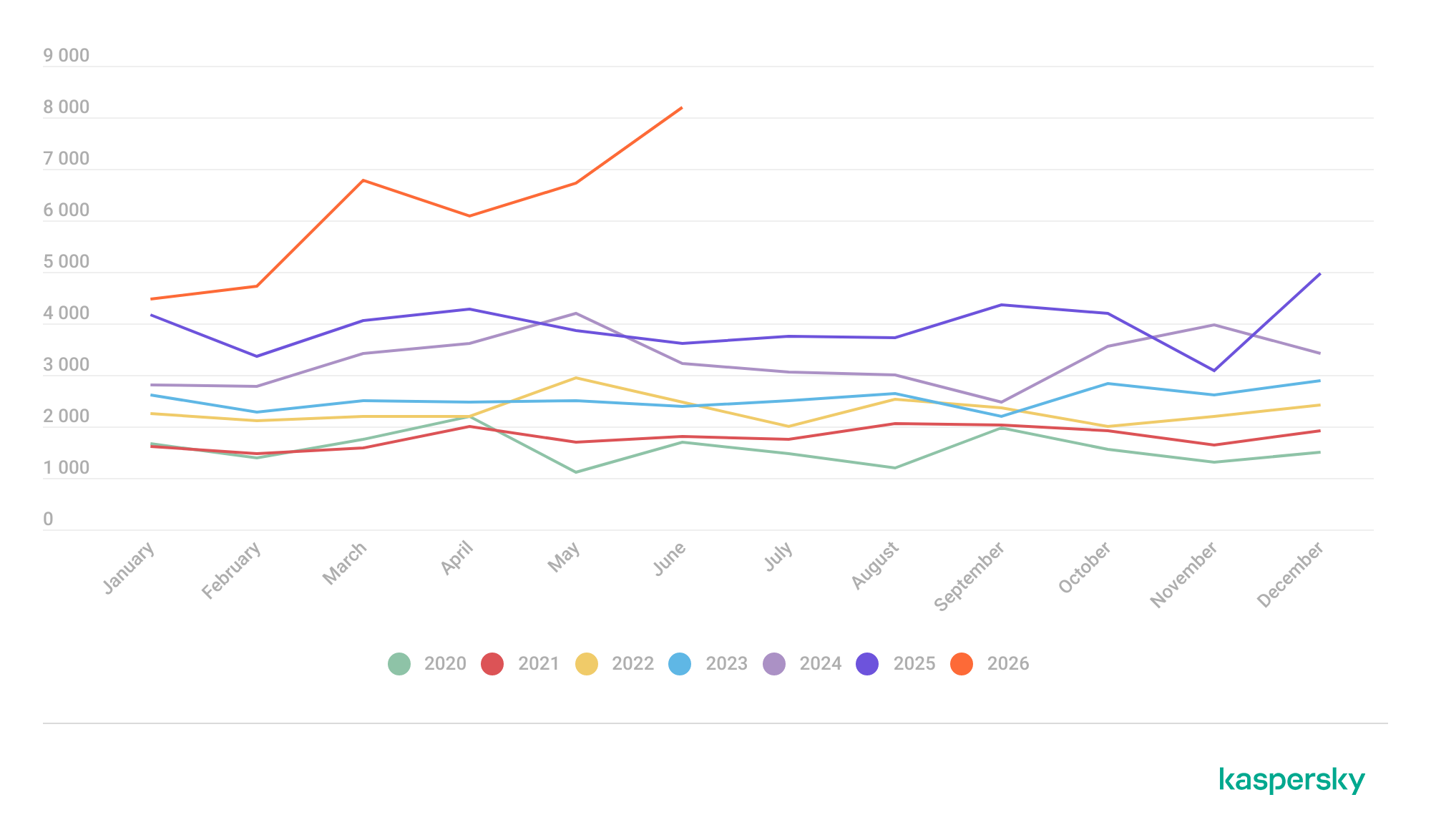
We examine the number of registered vulnerabilities for each month over the last five years. As the chart below shows, this number continues to surge, a trend reflected across all the databases we track. It’s driven primarily by the widespread adoption of AI tools: as we predicted in our previous report, these tools have played a major role in the discovery of vulnerabilities in third-party software. Meanwhile, these tools often contain security issues of their own. For example, OpenClaw, a popular AI project, ranked 12th among those with the highest number of vulnerabilities discovered and published in Q2, with over 200 CVEs registered during the reporting period. Finally, AI development tools are also contributing to the vulnerability landscape, since the quality of the code they produce can vary widely. Therefore, the rate at which new vulnerabilities are discovered will inevitably keep growing.
Total published vulnerabilities per month from 2022 through 2026 (download)
This is an extract. The publication continues at the source.
Read the original at the source: https://securelist.com/vulnerabilities-and-exploits-in-q2-2026/121091/
Officially imported this from Kaspersky Securelist’s own source and shows an extract. If you work there, claiming the profile and verifying the domain lets you choose to show the full text here.
Provenance
- Organization
- Kaspersky Securelist — imported from official source
- Official source
- https://securelist.com/feed/ RSS
- Imported
- September 20, 2026 19:52
- Versions
- 1 recorded
- Identity
https://kasperskycontenthub.com/securelist/?p=121091